

Updated October 2026
Click for Table of Contents
- How much annual leave do SCHADS employees get?
- What counts toward the 10 weekends?
- How does the 24-hour care shift test work?
- What does this look like on a real roster?
- Can an employee's shiftworker status change during the year?
- What happens if you give everyone four weeks, or everyone five?
- How do you check which employees are entitled to five weeks?
- FAQs about SCHADS shift worker annual leave
Under the SCHADS Award, some employees are entitled to five weeks of annual leave a year instead of four. It depends on how many weekends they work and how many 24-hour care shifts they do. This guide is for payroll, HR and finance teams at NDIS, disability and community services providers, and it explains the two shiftworker tests, what they look like on a real roster, and how to check your team.
If this rule is new to you, you're in good company. At a recent industry summit, our team asked a room of 20 to 30 providers whether they'd heard of it. Nobody had.
Free webinar replay
4 weeks or 5? Watch the replay
Tasya, our Head Trainer, walks through both SCHADS shiftworker tests and runs the Quantum of Leave report live on a payroll file.
How much annual leave do SCHADS employees get?
Under clause 31.2 of the SCHADS Award, an employee is a shiftworker for annual leave if, during the yearly period their leave accrues in, they meet either of two tests:
- They work more than 4 ordinary hours on 10 or more weekends.
- They work at least eight 24-hour care shifts under clause 25.8.
Meet either test and the employee is entitled to five weeks of annual leave for that year. Meet neither and it's four. As at October 2026, from the Fair Work Ombudsman's guidance on the extra week of annual leave for shiftworkers.
What counts toward the 10 weekends?
A weekend counts toward the SCHADS shiftworker test when the employee works more than 4 ordinary hours on it. Overtime hours are not ordinary hours, so they don't count, and a weekend with exactly 4 ordinary hours doesn't count either.
The weekends are counted across the yearly period the employee's leave accrues in, not over a single roster cycle or pay period. Ten weekends spread across the year count the same as ten in a row.
How does the 24-hour care shift test work?
An employee who works at least eight 24-hour care shifts in their leave year is a shiftworker for annual leave under the SCHADS Award, whether or not those shifts fall on weekends. 24-hour care shifts are the shifts set out in clause 25.8 of the award. The two tests are separate, so an employee only needs to meet one of them.
What does this look like on a real roster?
Here are four example employees over one leave year. All are covered by the SCHADS Award.
| Employee | Roster over the leave year | Test met | Annual leave |
|---|---|---|---|
| Mel, part-time | Weekdays, plus a 6-hour Saturday shift every second week (about 26 weekends) | Weekend test: more than 4 ordinary hours on 10 or more weekends | 5 weeks |
| Sam, full-time | Weekdays, plus a Sunday shift on 7 weekends | Neither: 7 weekends is fewer than 10 | 4 weeks |
| Priya, part-time home care worker | One 24-hour care shift a month (12 shifts) | 24-hour care test: at least eight shifts | 5 weeks, in proportion to her ordinary hours |
| Alex, casual | Most weekends | Not applicable: casuals don't accrue paid annual leave | None |
Can an employee's shiftworker status change during the year?
Yes. Because both tests are measured across the whole leave year, an employee's status depends on the shifts they actually work, not the role they were hired into. A part-timer who picks up Saturday shifts for a few months can move from four weeks to five. A worker who stops doing 24-hour care shifts can move the other way.
That means shiftworker status can't be set once at onboarding and left. It has to be checked against what each employee actually worked.
What happens if you give everyone four weeks, or everyone five?
Giving every employee four weeks underpays anyone who meets a shiftworker test, which is an underpayment of their annual leave entitlement under the award. Giving every employee five weeks avoids that, but it means accruing leave you don't owe, which adds to your leave liability and your costs.
Both happen, because checking by hand is slow. On one real provider's payroll file, the check found 12 staff accruing five weeks when they were entitled to four, and one staff member accruing four weeks when she'd earned five. That was about $15,960 in leave costs the provider didn't owe, plus an underpayment to fix.
How do you check which employees are entitled to five weeks?
To check by hand, pull every employee's ordinary hours by date for their leave year, count the weekends where they worked more than 4 ordinary hours, and count their 24-hour care shifts. Anyone with 10 or more qualifying weekends, or eight or more 24-hour care shifts, is entitled to five weeks. For a team of any size, that's a lot of counting, and it needs redoing as rosters change.
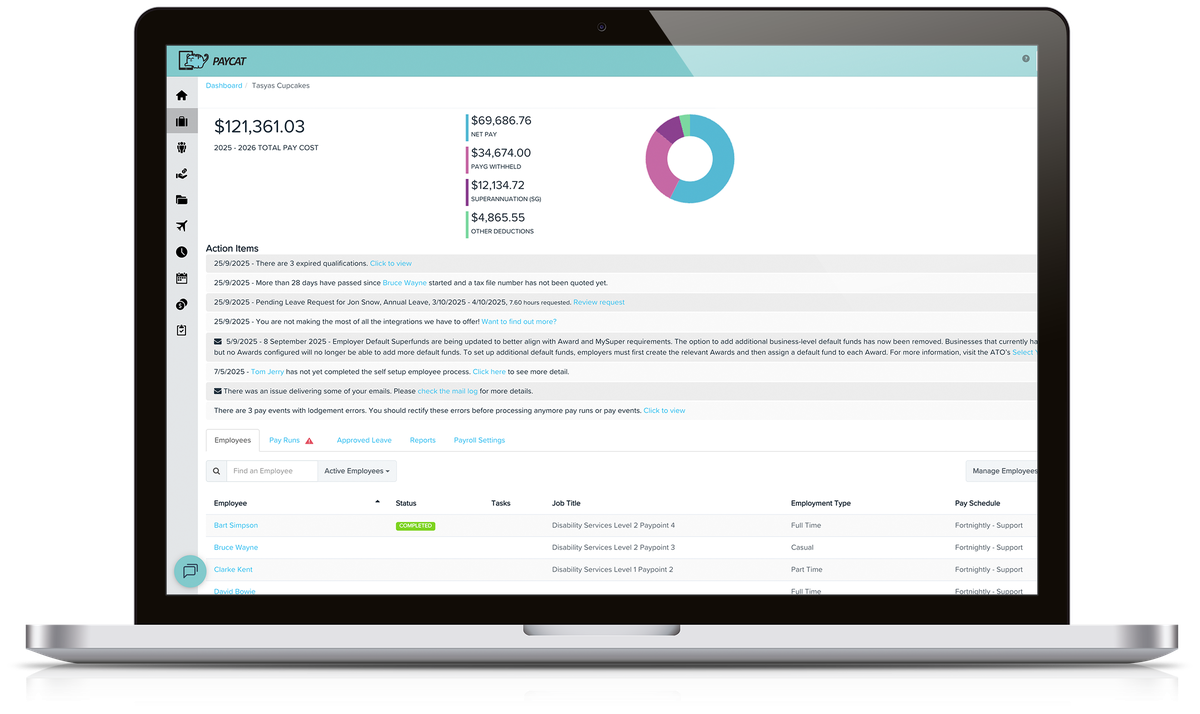
If you use Pay Cat Payroll, the Pay Cat Toolbox shift worker leave report does the counting for you. It checks every employee against both SCHADS tests using the shifts already in your payroll file, and shows who's entitled to four weeks and who's entitled to five. Toolbox costs $2 per active employee per month, added to your existing Pay Cat Payroll plan.
New in Pay Cat
Payroll reports, minus the spreadsheet scramble
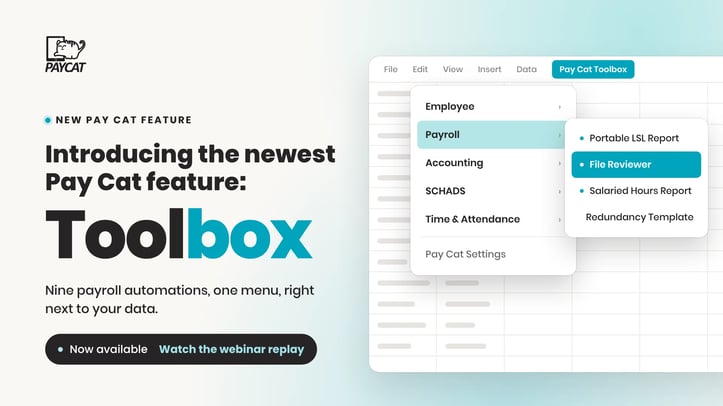
Meet Pay Cat Toolbox, the new feature with 9 tools to run payroll reports faster, including SCHADS shift worker leave. Missed the launch webinar? Watch the free replay and see every tool in action.
Watch the webinar replaySee how the Quantum of Leave report works
FAQs about SCHADS shift worker annual leave
What is the quantum of leave?
Quantum of leave is the payroll term for the amount of annual leave an employee accrues each year. Under the SCHADS Award, the quantum is four weeks for most full-time and part-time employees, and five weeks for employees who meet the award's shiftworker definition in clause 31.2.
Do part-time employees get five weeks of annual leave if they're shiftworkers?
Yes. A part-time employee who meets either SCHADS shiftworker test accrues five weeks of annual leave a year, in proportion to their ordinary hours, the same way they accrue the standard four weeks.
Do casual employees get the extra week of annual leave?
No. Casual employees don't accrue paid annual leave under the National Employment Standards, so the shiftworker week doesn't apply to them, however many weekends they work.
Does overtime count toward the SCHADS weekend test?
No. The SCHADS weekend test counts weekends where the employee works more than 4 ordinary hours. Overtime hours are not ordinary hours, so they don't count toward it.
Where is the shiftworker definition in the SCHADS Award?
As at October 2026, the shiftworker definition for annual leave is in clause 31.2 of the SCHADS Award, and 24-hour care shifts are set out in clause 25.8. The extra week of leave itself comes from section 87(1)(b) of the Fair Work Act.
```